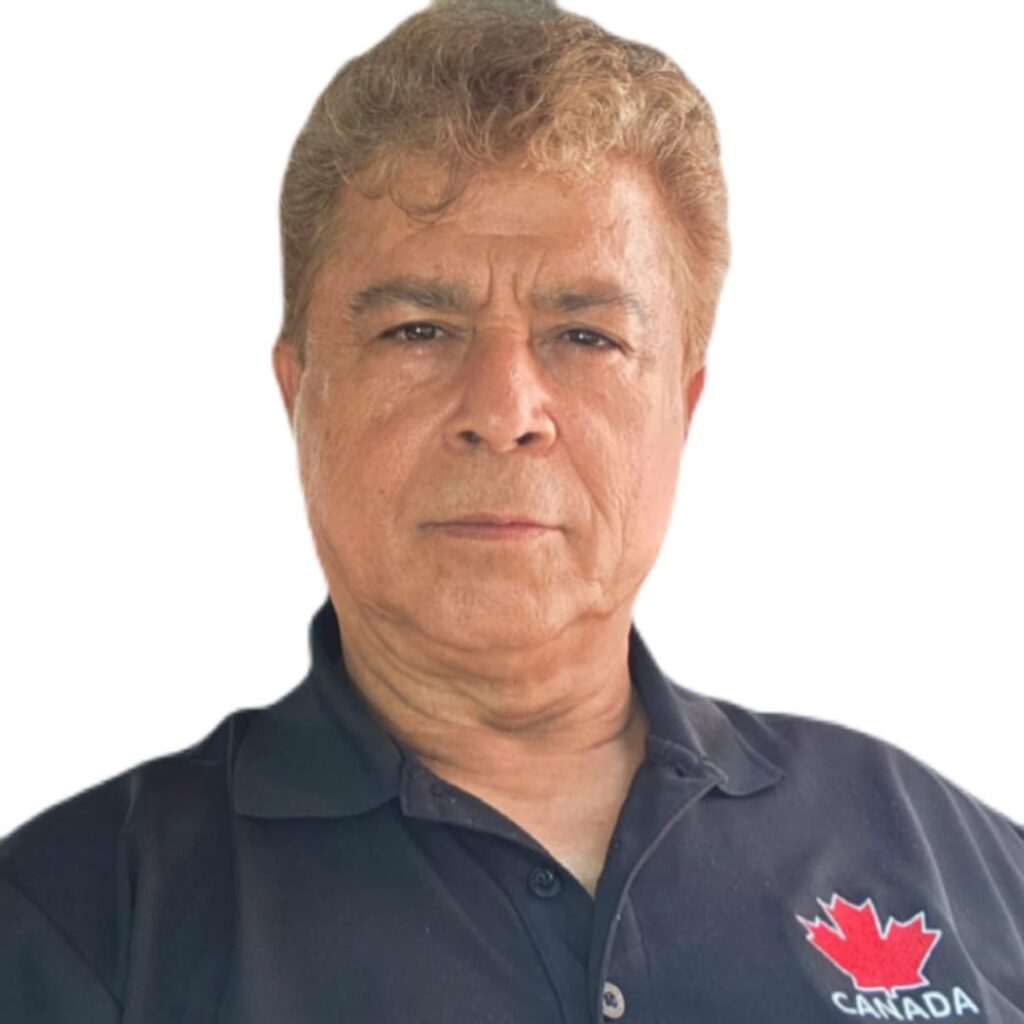
By Ijaz Ahmad Khan
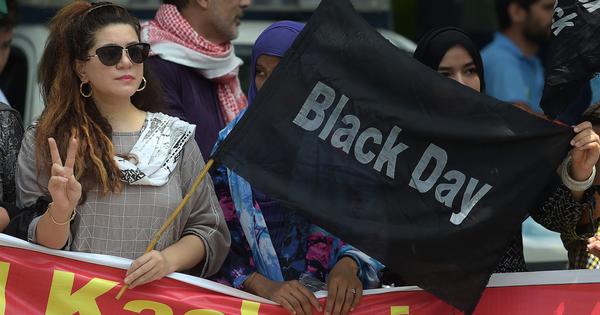
TORONTO: Kashmiris on both sides of the Line of Control (LoC) are set to observe Kashmir Exploitation Day on August 5 to condemn the illegal revocation of the special constitutional status of Indian Illegally Occupied Jammu and Kashmir (IIOJ&K) by the fascist Modi regime in 2019.
The Kashmiris will stage protest demonstrations and rallies to condemn the illegal decision of the Hindutva regime taken seven years ago on August 5, 2019, which significantly altered the region’s constitutional and administrative status.
Since then, the people of Indian Illegally Occupied Jammu and Kashmir are passing through the worst forms of state oppression and human rights abuses unleashed by Indian Occupation Forces in a bid to suppress the legitimate freedom movement but have failed. “After revoking the special status of IIOJ&K, the fascist Modi Govt had broken all records of repression and state-sponsored terrorism in the held valley where freedom is a crime and silence is survival, words are weapons, and truth is treason,” said Mushtaq Ahmed Shah, Vice Chairman, Jammu and Kashmir People’s League while talking on the eve of Kashmir Exploitation Day.
“As the sun disappears behind the majestic Mahadev Mountain at Srinagar in Indian Illegally Occupied Jammu and Kashmir (IIOJ&K), the atmosphere is laden with immense terror and oppression due to continued state terrorism unleashed by nearly one million Indian occupational forces since they invaded the held valley on October 27, 1947.”
He said the Indian forces, accompanied by sniffer dogs, entered the houses of Kashmiris in the name of so-called search and cordon operations, and assaulted innocent Kashmiris including women and children besides making them almost sleepless.
The reality remained even more stark and painful since the Hindutva Modi regime abrogated the special status of IIOJ&K on August 5, 2019, casting a long shadow of despair and desolation over the held valley.
The oppressive environment has fundamentally changed daily life in IIOJ&K where families refrain from discussing political issues, fearing night raids at their homes in Srinagar and other towns of the held valley.
Schools, colleges and business centres mostly operate under the specter of military presence in IIOJ&K where many parents are reluctant to send their children, especially girls, to educational institutes, mosques and bazaars due to fear of harassment and human rights abuses.
The indiscriminate firing, cluster ammunition, sniper attacks and excessive use of pellet guns have made life a nightmare for over one million Kashmiris in IIOJ&K where innocent Kashmiris were killed in fake encounters and false flag operations besides women and children being assaulted as weapons of war.
Mushtaq referred to the 43-page report of the Office of the United Nations High Commissioner for Human Rights (OHCHR) 2019, exposing Indian forces’ systematic terrorism and war crimes in IIOJ&K where India had never allowed independent observers in a bid to hide the cases of human rights abuses and mass graves.
The report testified that Indian occupation forces used excessive force and pellet guns against peaceful Kashmiris after the August 5 illegal act, resulting in the deaths and injuries of a large number of civilians, which was a clear violation of the UN Basic Principles on the Use of Force and Firearms by Law Enforcement Officials. Referring to India’s Armed Forces (Jammu and Kashmir) Special Powers Act (AFSPA) promulgated in Occupied Kashmir in 1990, he said the Indian Govt had granted full immunity to its forces from prosecution in civil courts, and allowed the detention of Kashmiri leadership without any charge or trial.
The black law was frequently used to detain peaceful protesters, Kashmiri leadership, political dissidents, and human rights activists. The puppet Indian state government in IIOJ&K amended Section 10 of the Public Safety Act in 2018 under which freedom fighters and separatist political leaders were being transferred to prisons outside of IIOJ&K and languished there for years. Mirpur AJK District Council Chairman, Raja Naveed Akhtar said that human rights abuses in IIOJ&K have made life a nightmare for oppressed Kashmiris. “The social media is closely monitored and WhatsApp groups are infiltrated in IIOJ&K while school textbooks were revised to reflect a nationalist narrative but failed.”
He said peaceful protests in the held Kashmir are met with brutal force where women and children are being used as human shields and subjected to severe physical torture.
Akhtar said the youth in IIOJ&K were even arrested for sharing a freedom poem on social media and laws like the Unlawful Activities (Prevention) Act (UAPA) are wielded with alarming regularity, and human rights defenders, students, poets, and even comedians were jailed under its sweeping provisions, often without trial for months, or even years.
Referring to reports of Amnesty International and Human Rights Watch, he said there is a clear pattern of vague charges, prolonged detention without proper justice, and a system that often operates in the shadow of national security rhetoric in IIOJ&K.
Furthermore, India’s apartheid regime did not allow mass rituals and the funeral of great Kashmiri leader Syed Ali Gillani and his body was forcefully snatched from the bereaved family and buried at night.
Similarly, great Hurriyat leader Muhammad Yasin Malik was jailed for life in a fake case in a bid to silence his strong voice for Kashmir’s freedom, and terrorize other Kashmiri leadership.
The brutal killing of freedom fighter Burhan Wani and other Kashmiri leadership in fake encounters, besides the issuance of over six million illegal domicile certificates of IIOJ&K to Hindus, and the brutal killing of tourists at Pahalgam in a false flag operation, had exposed the anti-Kashmir policies of the Hindutva regime.
The gruesome violation of human rights, including the forced disappearance of over 8,000 innocent Kashmiris, 8,652 unmarked mass graves and the imposition of the longest curfew on some 10 million unarmed Kashmiris, further exposed India’s ugly secular face before the world, he said.
The Kashmiri leader, while citing the September 2021 Pakistani dossier, said that about 8,652 unmarked graves were identified in 89 villages of six districts in the held valley while the bodies of 37 Kashmiris burnt alive by Indian forces were beyond recognition.
Around 162,000 cases of arbitrary arrests and torture, over 25,000 pellet gun injuries, 11,250 women raped, 23,000 women widowed and over 108,000 children orphaned since 1989 in IIOJ&K.
The excessive use of snipers and cluster ammunition by India to target innocent Kashmiris along the LoC, the use of children and women as human shields by the Indian army during encounters, and making them sleep at military camps, forcing them to dig out minefields and tying youth to military jeeps, have further testified to the Modi government’s involvement in war crimes and genocide of the Kashmiris. The burning of mosques, houses and shops belonging to Muslims in the BJP-led Tripura state by Hindutva groups of RSS, VHP and Bajrang Dal had unveiled Modi’s tyranny against minorities, especially Muslims.
He said that mosques in Krishnagar, Dharmanagar, Panisagar, and Chandrapur were vandalized in the recent past by saffron-wearing youth in planned attacks on the Muslim population.
Dr. Ejaz Khan, former Chairman, International Relations Department, University of Peshawar, said the illegal occupation of the Kashmir valley by India violated multiple articles of the 30 fundamental human rights of the Universal Declaration of Human Rights (UDHR) drafted by representatives from all the regions of the world, including India, on December 10, 1948, and was adopted by the UNGA.
“I think the time has come that the international community should look beyond trade and business interests and step forward with collective action to stop the genocide of oppressed Kashmiris, besides pressuring the RSS-backed Hindutva Modi government to reverse all its illegal actions of August 5, 2019, and give the right of self-determination to Kashmiris, which is inevitable for lasting peace and stability in South Asia.”
Former Ambassador Manzoorul Haq said that August 5 was the blackest day in Kashmir history as on this day, seven years ago, India had tried to rob Kashmiris of their identity, land and freedom.
Despite the severity of the grim human rights situation in IIOJ&K, he said the international community’s response has been muted, which was highly deplorable.
He said four wars were fought on the Kashmir dispute between the two nuclear-armed neighbours, and another war could bring devastation for world peace, especially in South Asia. The experts urged the UNO and world powers to come forward with meaningful actions to address the Kashmir dispute, like that of East Timor.
They said the resolution of the Kashmir dispute was imperative for the progress and prosperity of billions of people living in the subcontinent. In IIOJ&K, the voice for freedom is no longer a right but a serious life risk, and silence has become the only currency of survival.
But as history has shown, even the deepest winters eventually thaw, and the time is nearer when the people of the held valley will get freedom from the Indian yoke.
The world must choose either to continue to turn a blind eye to human rights abuses and state terrorism in IIOJ&K, or listen to the silence of millions of oppressed Kashmiris because in the held valley, even silence is screaming.
Edited by Sumayya
Editor/Reporter
www:sportslinehd.com
About the Author